PsA GRAPPA Domains: Outcomes With Upadacitinib
- 18-minute listen
Rheumatologists Dr. Schwartzman and Dr. Ruderman discuss how disease activity across GRAPPA domains may guide treatment decisions, offer management considerations for patients with PsA who have failed prior biologic therapy, and review the evidence for and their experience with upadacitinib across domains
Podcast
- Dr. Alvin Wells and Dr. Shikha Singla • January 2026
The experts

Sergio Schwartzman, MD
Franchellie M. Cadwell Emeritus Clinical Associate Attending Physician, Hospital for Special Surgery
Associate Professor of Medicine Weill Cornell Medical Center
Associate Attending Physician New York Presbyterian Hospital
New York, NY

Eric Ruderman, MD
Professor of Medicine
Associate Chief, Clinical Affairs
Division of Rheumatology
Northwestern University
Feinberg School of Medicine
Chicago, IL
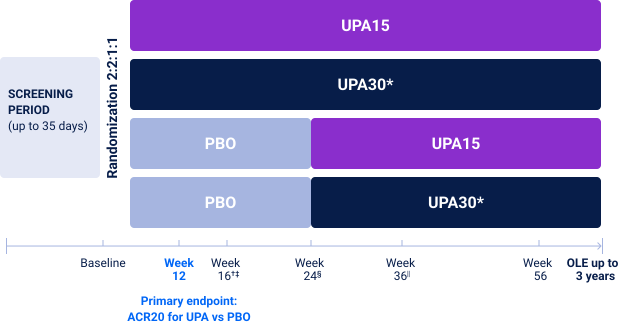
SELECT-PsA 2 study design1,2
A multicenter, randomized, double-blind, Phase 3 PBO-controlled trial of UPA in patients with active PsA who had an inadequate response or intolerance to ≥1 biologic DMARD1*
*UPA is only indicated for patients with inadequate response or intolerance to one or more TNF blockers.3
Enrollment criteria
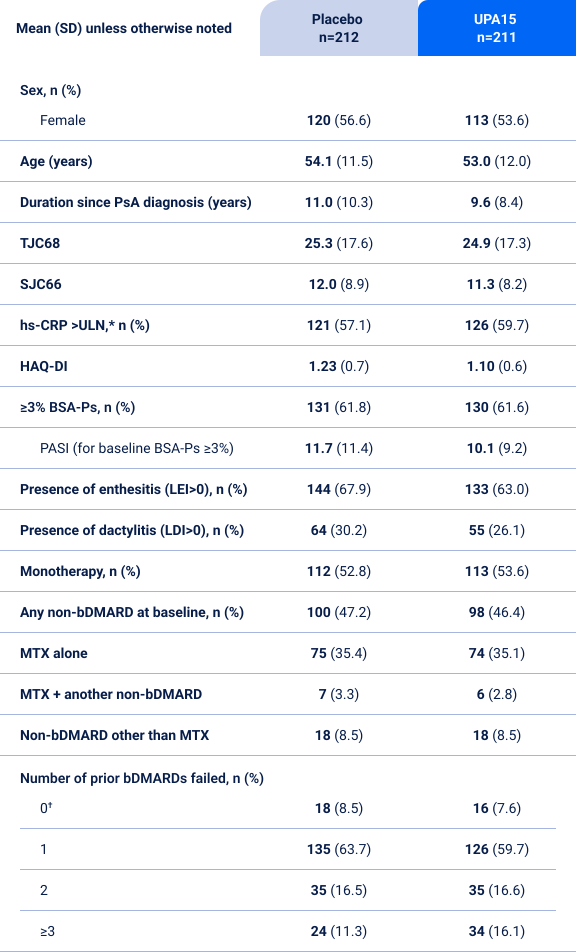
- Adults ≥18 years of age with a diagnosis of PsA with symptom onset for ≥6 months, who fulfilled CASPAR, had historical or current plaque psoriasis, ≥3 swollen joints (of 66) and ≥3 tender joints (of 68) at screening and at baseline
- Excluded patients who had a prior JAKi, a history of fibromyalgia, had arthritis with onset prior to 17 years of age, or had a diagnosis of inflammatory joint disease other than PsA
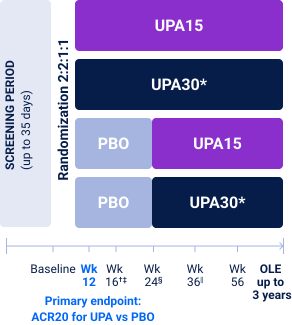
24-week randomized, double-blind, PBO-controlled period followed by an additional 32 weeks of blinded active treatment (Weeks 24–56).
*UPA30 is not an approved dosing regimen. †Starting at Week 16, patients who did not achieve at least 20% improvement in TJC68 or SJC66 compared to baseline at Weeks 12 and 16 had background medication(s) adjusted or initiated. ‡After Week 16, the use of concomitant treatments for psoriasis was permitted. §At Week 24, all remaining PBO patients were switched to UPA15 or UPA30, regardless of response. ||Starting at Week 36, patients who did not achieve ≥20% improvement in TJC68 and SJC66 compared to baseline at two consecutive visits were discontinued from the study.
Explore UPA outcomes by
PsA GRAPPA domain
Click to view
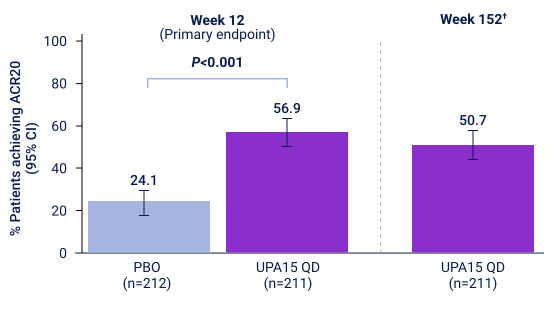
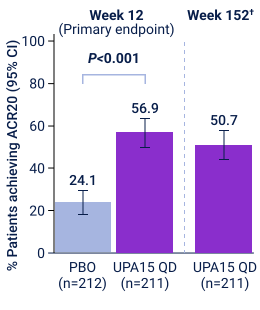
UPA15 met its primary endpoint
Proportion of patients achieving ACR201,4* (NRI)
UPA is only indicated for patients with inadequate response or intolerance to a TNF blocker.
*The ACR20 is a composite measure defined as both improvement of 20% in the number of tender (TJC68) and number of swollen joints (SJC66) AND a 20% improvement in three of the remaining five criteria: VAS scores of patient pain, physician and patient global assessment, a disability measure (HAQ-DI), and an acute phase reactant (ESR or CRP).5 †OLE limitation: There is a potential for enrichment of the long-term data in the remaining patient population since patients who are unable to tolerate or do not respond to the drug often drop out.
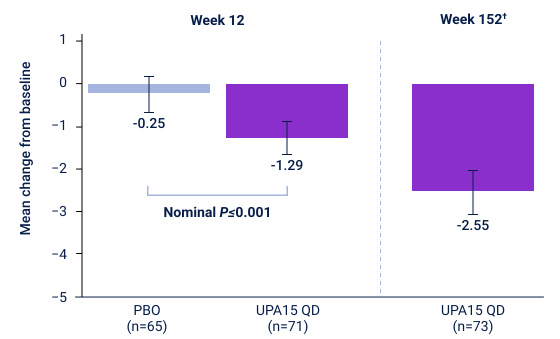
Mean change from baseline in modified BASDAI (excluding Q3)6,7* (MMRM; post hoc analysis)
UPA is only indicated for patients with inadequate response or intolerance to a TNF blocker.
*In patients with axial involvement at baseline based on investigator judgement alone.6 BASDAI comprises six components: Q1 Fatigue, Q2 Spinal pain, Q3 Peripheral arthritis, Q4 Enthesitis, Q5 Intensity of morning stiffness, and Q6 duration of morning stiffness. Modified BASDAI excludes Q3—How would you describe the overall level of pain/swelling in joints other than neck, back, or hips you have had?6,8 †OLE limitation: There is a potential for enrichment of the long-term data in the remaining patient population since patients who are unable to tolerate or do not respond to the drug often drop out.
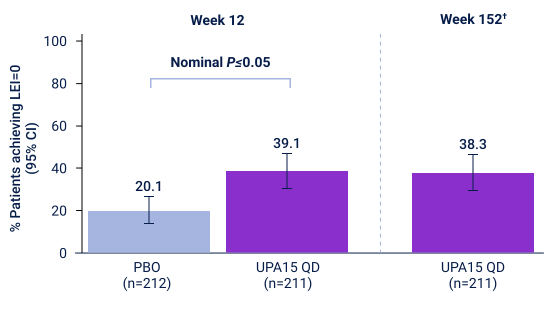
Resolution of enthesitis (defined as LEI=0)1,2,4* (NRI)
UPA is only indicated for patients with inadequate response or intolerance to a TNF blocker.
*Analysis is in patients with baseline LEI>0. LEI assesses six enthesial sites for presence or absence of tenderness, including bilateral lateral epicondyles, medial femoral condyles, and Achilles tendon insertions, with an overall score range of 0–6. A higher count represents greater enthesitis burden.9 †OLE limitation: There is a potential for enrichment of the long-term data in the remaining patient population since patients who are unable to tolerate or do not respond to the drug often drop out.
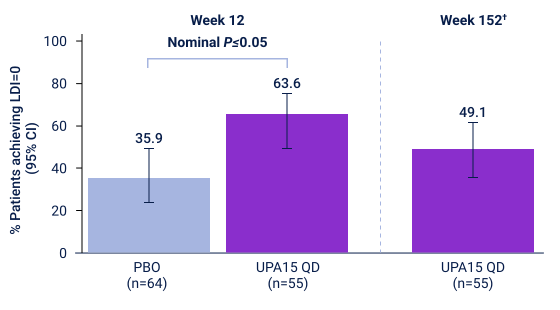
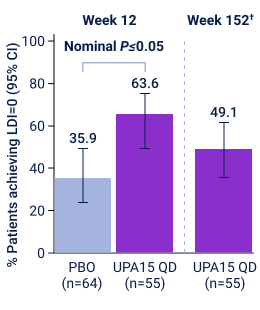
Resolution of dactylitis (defined as LDI=0)1,2,4* (NRI)
UPA is only indicated for patients with inadequate response or intolerance to a TNF blocker.
*Analysis is in patients with baseline LDI>0. LDI assesses the circumference of the affected fingers, the circumference of contralateral fingers, and tenderness of affected fingers for a total score generated for each finger and added together if multiple fingers are affected. A higher score represents worse dactylitis.9 †OLE limitation: There is a potential for enrichment of the long-term data in the remaining patient population since patients who are unable to tolerate or do not respond to the drug often drop out.
Proportion of patients achieving PASI 751,4* (for patients with ≥3% BSA-Ps at baseline; NRI)
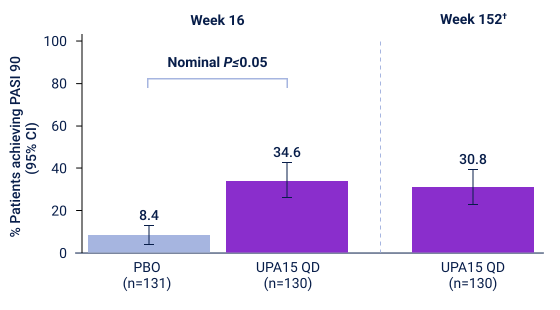
Proportion of patients achieving PASI 901,4* (for patients with ≥3% BSA-Ps at baseline; NRI)
UPA is only indicated for patients with inadequate response or intolerance to a TNF blocker.
UPA is not indicated for the treatment of plaque psoriasis.
*PASI measures psoriasis severity at four anatomic sites—head, upper extremities, trunk, and lower extremities are assessed for erythema, induration, and desquamation—using a 5-point scale. PASI 75/90 represents the percentage (or number) of patients who have achieved a 75%/90% or more reduction in their PASI score from baseline.2,9 †OLE limitation: There is a potential for enrichment of the long-term data in the remaining patient population since patients who are unable to tolerate or do not respond to the drug often drop out.
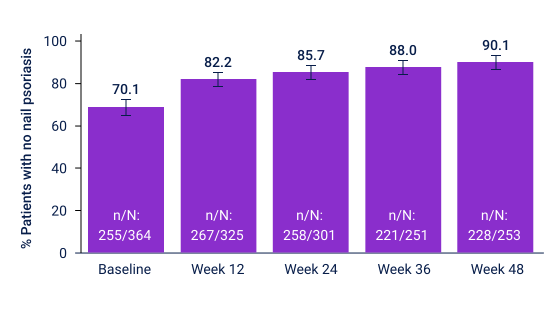
UPJOINT: an international, prospective, open-label observational study over 48 weeks of PsA treatment with UPA10,11
- In UPJOINT, 71.2% (259/364) of the study population had prior bDMARD/tsDMARD11
- At baseline, 29.9% (109/364) of patients had presence of nail psoriasis11
Proportion of patients receiving UPA15 without nail psoriasis11,12* (AO†)
UPA is only indicated for patients with inadequate response or intolerance to a TNF blocker.
*Data from the UPJOINT study. UPJOINT primary endpoint: 41.5% of patients (n=125/301; 95% CI, 35.9–47.3%) achieved MDA at Week 24 (AO†).11,12
Limitations: These real-world data were collected observationally outside controlled trials and are descriptive only. The presence of nail psoriasis was an additional endpoint not ranked or adjusted for multiplicity; therefore, no clinical or statistical conclusions can be drawn. Uncontrolled confounding due to the absence of randomization, a comparator, and multiplicity control can preclude the interpretation of treatment effects. Assessment of clinical measures may be subjective and differ between respondents. The presence of nail psoriasis was determined by physician judgement (yes/no), rather than by a standardized method for evaluating clinical presentations of nail disease. A causal relationship between real-world treatment utilization and outcomes cannot be determined. †As observed analyses often include missing or unrecorded data, which can introduce bias, enrich the population, and may underestimate the presence of nail disease. The open-label nature of this study may have introduced bias and influenced results.
UPJOINT was a multicenter, prospective, open-label observational study in adults with active PsA involving at least one swollen joint of 66 joints assessed. Coexisting plaque psoriasis or nail psoriasis was not required for inclusion into the study. Patients initiated treatment with UPA15 in routine clinical practice, with the prescribing decision made by the physician prior to patient participation in the study, and were treated continuously with UPA15 for 48 weeks. Patients were enrolled at rheumatology centers in Germany and Canada from February 2021 to July 2023. Use of concomitant antirheumatic therapies, such as glucocorticoids or methotrexate, was permitted. Patients could not previously be on a JAKi. The primary endpoint was the percentage of patients achieving MDA at Week 24.
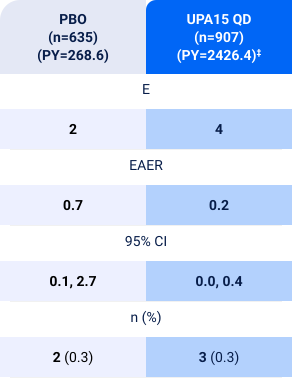
Select extra-musculoskeletal manifestations (EMMs) in the SELECT-PsA studies13* (post hoc analysis)
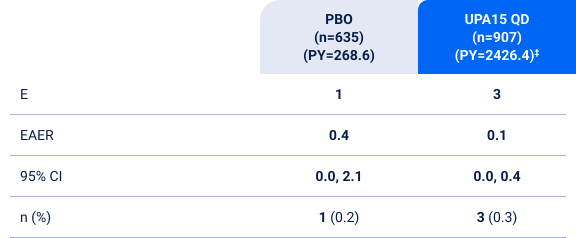
Development of uveitis in patients treated with UPA across PsA
Total uveitis in PsA studies†
Development of IBD in patients treated with UPA across PsA
Total IBD in PsA studies§
*Data cutoff: August 15, 2022. Post hoc analysis describes data from SELECT-PsA 1 and SELECT-PsA 2. EMMs were captured as part of the patient’s general medical history at baseline and were reported as TEAEs by investigators during the study. †Uveitis (new onset or recurrent flare) is categorized as anterior uveitis (including iritis and iridocyclitis) or uveitis, not otherwise specified. ‡Any exposure to UPA, including patients who switched from PBO to UPA15. §IBD was new onset or flare. Crohn’s disease and colitis, not otherwise specified, were the most frequently reported subtypes of IBD in patients treated with UPA15.
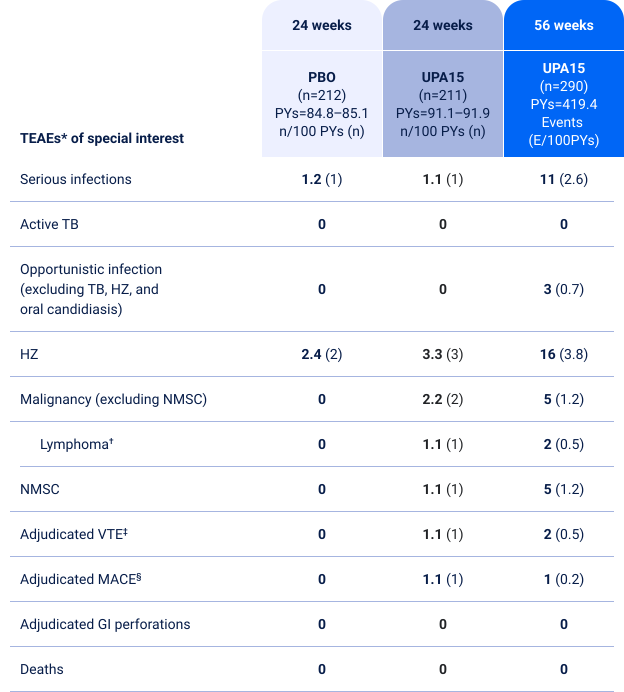
Safety in the SELECT-PsA 2 study
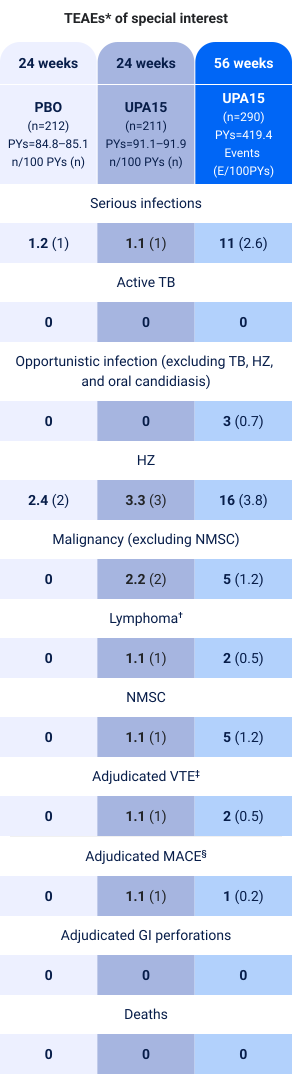
24- and 56-week data1,3,14
SELECT-PsA 2 laboratory abnormalities through Week 24: laboratory-related TEAEs for UPA (n=211) and PBO (n=212), respectively, in %: anemia (1.9%, 0.9%); neutropenia (0.9%, 0.5%); lymphopenia (0.9%, 0%); renal dysfunction (0%, 0.5%); CPK elevations (1.9%, 1.9%)1
*TEAE is defined as an AE with an onset date that is on or after the first dose of study drug in Period 1 and prior to the Week 24 dose date, or up to 30 days after the last dose of PBO or UPA, if a patient discontinued study drug prematurely before Week 24 dosing. †Reported as abnormal lymphocyte morphology and none were confirmed to be lymphoma. ‡VTE included DVT and PE. §MACE is defined as cardiovascular death, nonfatal myocardial infarction, and nonfatal stroke.
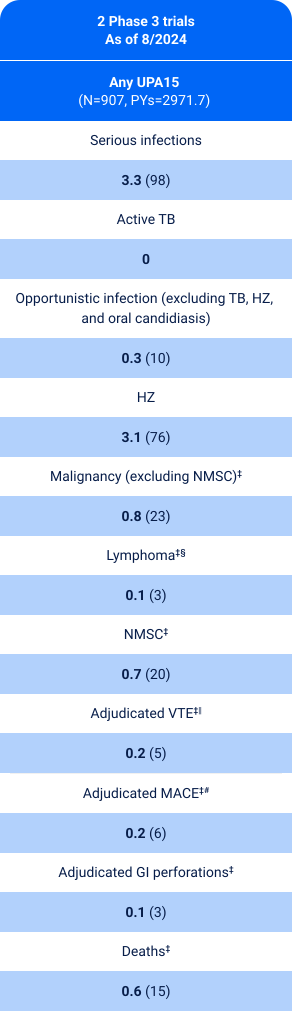
Long-term safety data from the PsA Phase 3 program
Long-term exposure15*
*Long-term safety data as of August 15, 2024. Based on >2900 PYs of exposure from the PsA Phase 3 program. †TEAE is defined as an AE with an onset date that is on or after the first dose of study drug in Period 1 and prior to the Week 24 dose date, or up to 30 days after the last dose of PBO or UPA, if a subject discontinued study drug prematurely before Week 24 dosing. ‡Data shown are n/100 PY (n). §Reported as abnormal lymphocyte morphology and none were confirmed to be lymphoma. ॥VTE included DVT and PE. #MACE is defined as cardiovascular death, nonfatal myocardial infarction, and nonfatal stroke.
The safety profile of UPA 15 mg in patients with active PsA was generally consistent with the safety profile observed in patients with rheumatoid arthritis1,4,16,17
Key takeaways
UPA outcomes across GRAPPA domains
- UPA is a treatment option for patients with active PsA and prior inadequate response or intolerance to one or more TNF inhibitors
- The impact of UPA has been seen across all six of the GRAPPA PsA domains
- The safety profile of UPA in SELECT-PsA 2 was generally consistent with results reported previously in rheumatoid arthritis
Key takeaways
UPA outcomes across GRAPPA domains
- UPA is a treatment option for patients with active PsA and prior inadequate response or intolerance to one or more TNF inhibitors
- The impact of UPA has been seen across all six of the GRAPPA PsA domains
- The safety profile of UPA in SELECT-PsA 2 was generally consistent with results reported previously in rheumatoid arthritis
INDICATIONS
Adults with moderately to severely active rheumatoid arthritis (RA) who have had an inadequate response or intolerance to one or more tumor necrosis factor (TNF) blockers.
Important safety considerations and boxed warning
Serious Infections: Patients treated with upadacitinib are at increased risk for developing serious infections that may lead to hospitalization or death. These infections include tuberculosis (TB), invasive fungal, bacterial, viral, and other infections due to opportunistic pathogens. Most patients who developed these infections were taking concomitant immunosuppressants, such as methotrexate or corticosteroids. Test for latent TB before and during therapy; treat latent TB prior to use. Consider the risks and benefits prior to initiating therapy in patients with chronic or recurrent infection. If a serious infection develops, interrupt upadacitinib until the infection is controlled.
Mortality: In a postmarketing safety study in RA patients ≥ 50 years of age with at least one cardiovascular (CV) risk factor comparing another JAK inhibitor to TNF blockers, a higher rate of all-cause mortality, including sudden CV death, was observed with the JAK inhibitor.
Malignancies: Malignancies have been observed in upadacitinib treated patients. In RA patients treated with another JAK inhibitor, a higher rate of lymphomas and lung cancers was observed when compared with TNF blockers. Patients who are current or past smokers are at additional increased risk. Consider the benefits and risks for the individual patient prior to initiating or continuing therapy with upadacitinib, particularly in patients with a known malignancy (other than a successfully treated non-melanoma skin cancer [NMSC]), patients who develop a malignancy when on treatment, and patients who are current or past smokers. NMSCs have been reported in patients treated with upadacitinib. Periodic skin examination is recommended for patients who are at increased risk for skin cancer. Advise patients to limit sunlight exposure by wearing protective clothing and using sunscreen.
Major Adverse Cardiovascular Events (MACE): In RA patients who were ≥ 50 years of age with at least one CV risk factor treated with another JAK inhibitor, a higher rate of MACE (CV death, myocardial infarction, and stroke) was observed compared with TNF blockers. Patients who are current or past smokers are at additional increased risk. Consider the benefits and risks for the individual patient prior to initiating or continuing therapy with upadacitinib. Patients should be informed about the symptoms of serious CV events and the steps to take if they occur. Discontinue upadacitinib in patients that have experienced a myocardial infarction or stroke.
Thrombosis: Thromboses, including deep vein thrombosis, pulmonary embolism, and arterial thrombosis, have occurred in patients treated with JAK inhibitors, including upadacitinib. Many of these adverse events were serious and some resulted in death. In RA patients who were ≥ 50 years of age with at least one CV risk factor treated with another JAK inhibitor, a higher rate of thrombosis was observed when compared with TNF blockers. Avoid upadacitinib in patients at risk. Patients with symptoms of thrombosis should discontinue upadacitinib and be promptly evaluated.
Hypersensitivity Reactions: Upadacitinib is contraindicated in patients with known hypersensitivity to upadacitinib or any of its excipients. Serious hypersensitivity reactions such as anaphylaxis and angioedema were reported in patients receiving upadacitinib in clinical trials. If a clinically significant hypersensitivity reaction occurs, discontinue upadacitinib and institute appropriate therapy.
Other Serious Adverse Reactions: Patients treated with upadacitinib also may be at risk for other serious adverse reactions, including gastrointestinal perforations, neutropenia, lymphopenia, anemia, lipid elevations, liver enzyme elevations, and embryo-fetal toxicity. If upadacitinib exposure occurs during pregnancy, please report the pregnancy to the surveillance program by calling 1-800-633-9110.
Vaccinations: Avoid use of live vaccines during, or immediately prior to, upadacitinib therapy. Prior to initiating upadacitinib, it is recommended that patients be brought up to date with all immunizations, including prophylactic varicella zoster or herpes zoster vaccinations, in agreement with current immunization guidelines.
Medication Residue in Stool: Reports of medication residue in stool or ostomy output have occurred in patients taking upadacitinib extended-release tablet. Most reports described patients with shortened gastrointestinal transit times. Instruct patients to contact their healthcare provider if medication residue is observed repeatedly.
Common Adverse Reactions in RA and PsA: The most common adverse reactions (≥1%) were upper respiratory tract infections, herpes zoster, herpes simplex, bronchitis, nausea, cough, pyrexia, acne, and headache.
Review accompanying upadacitinib full Prescribing Information for additional information, visit www.rxabbvie.com or contact AbbVie Medical Information at 1-800-633-9110.

Expore Related topics on RheumNow.com

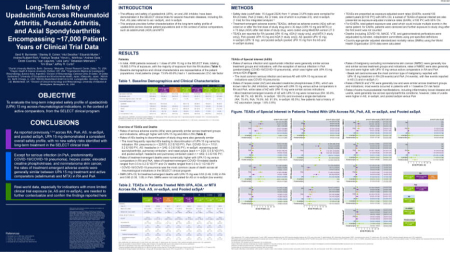
Long-term safety of a JAKi across ~17,000 patient-years
Presented at EULAR 2025, this poster examines the long-term safety of UPA across multiple Phase 3 trials

A JAKi CHAT: Shared Decision-Making in RA
Dr. Jeffrey Curtis and Dr. Kevin Winthrop discuss their approaches to shared decision-making in RA and the efficacy and safety of upadacitinib
ACR20, American College of Rheumatology 20% improvement score; AE, adverse event; AO, as observed; BASDAI, Bath Ankylosing Spondylitis Disease Activity Index; bDMARD, biologic disease-modifying antirheumatic drug; BSA-Ps, body surface area psoriasis; DMARD, disease-modifying antirheumatic drug; CASPAR, ClASsification criteria for Psoriatic Arthritis; CI, confidence interval; CPK, creatine phosphokinase; CRP, C-reactive protein; DVT, deep vein thrombosis; E, event; EAER, exposure-adjusted event rate; EMM, extra-musculoskeletal manifestations; ESR, erythrocyte sedimentation rate; GI, gastrointestinal; GRAPPA, Group for Research and Assessment of Psoriasis and Psoriatic Arthritis; HAQ-DI, Health Assessment Questionnaire Disability Index; hs-CRP, high-sensitivity C-reactive protein; HZ, Herpes zoster; IBD, inflammatory bowel disease; JAKi, Janus kinase inhibitor; LDI, Leeds Dactylitis Index; LEI, Leeds Enthesitis Index; MACE, major adverse cardiovascular event; MDA, minimal disease activity; MTX, methotrexate; NMSC, nonmelanoma skin cancer; NRI, non-responder imputation; OLE, open-label extension; PASI75, 75% reduction in Psoriasis Area Severity Index score from baseline; PASI90, 90% reduction in Psoriasis Area Severity Index score from baseline; PBO, placebo; PE, pulmonary embolism; PsA, psoriatic arthritis; PY, patient-years; Q, question; QD, once per day; SD, standard deviation; SJC66, swollen joint count based on 66 joints; TB, tuberculosis; TEAE, treatment-emergent adverse event; TJC68, tender joint count based on 68 joints; TNF, tumor necrosis factor; TNFi-IR, tumor necrosis factor inhibitor inadequate response; tsDMARD, targeted synthetic disease-modifying antirheumatic drug; ULN, upper limit of normal; UPA, upadacitinib; UPA15, upadacitinib 15 mg; UPA30, upadacitinib 30 mg; VAS, visual analog scale; VTE, venous thromboembolism
ACR20, American College of Rheumatology 20% improvement score; AE, adverse event; AO, as observed; BASDAI, Bath Ankylosing Spondylitis Disease Activity Index; bDMARD, biologic disease-modifying antirheumatic drug; BSA-Ps, body surface area psoriasis; DMARD, disease-modifying antirheumatic drug; CASPAR, ClASsification criteria for Psoriatic Arthritis; CI, confidence interval; CPK, creatine phosphokinase; CRP, C-reactive protein; DVT, deep vein thrombosis; E, event; EAER, exposure-adjusted event rate; EMM, extra-musculoskeletal manifestations; ESR, erythrocyte sedimentation rate; GI, gastrointestinal; GRAPPA, Group for Research and Assessment of Psoriasis and Psoriatic Arthritis; HAQ-DI, Health Assessment Questionnaire Disability Index; hs-CRP, high-sensitivity C-reactive protein; HZ, Herpes zoster; IBD, inflammatory bowel disease; JAKi, Janus kinase inhibitor; LDI, Leeds Dactylitis Index; LEI, Leeds Enthesitis Index; MACE, major adverse cardiovascular event; MDA, minimal disease activity; MTX, methotrexate; NMSC, nonmelanoma skin cancer; NRI, non-responder imputation; OLE, open-label extension; PASI75, 75% reduction in Psoriasis Area Severity Index score from baseline; PASI90, 90% reduction in Psoriasis Area Severity Index score from baseline; PBO, placebo; PE, pulmonary embolism; PsA, psoriatic arthritis; PY, patient-years; Q, question; QD, once per day; SD, standard deviation; SJC66, swollen joint count based on 66 joints; TB, tuberculosis; TEAE, treatment-emergent adverse event; TJC68, tender joint count based on 68 joints; TNF, tumor necrosis factor; TNFi-IR, tumor necrosis factor inhibitor inadequate response; tsDMARD, targeted synthetic disease-modifying antirheumatic drug; ULN, upper limit of normal; UPA, upadacitinib; UPA15, upadacitinib 15 mg; UPA30, upadacitinib 30 mg; VAS, visual analog scale; VTE, venous thromboembolism; WK, Week
- Mease PJ et al. Ann Rheum Dis. 2021;80(3):312-320.
- Mease PJ et al. Ann Rheum Dis. (suppl). 2021;80(3):312-320.
- RINVOQ (upadacitinib) [package insert]. North Chicago, IL: AbbVie Inc.
- Mease PJ et al. Clin Exp Rheumatol. 2023;41(11):2286-2297.
- Mease PJ et al. Ann Rheum Dis. 2005;64 (suppl 2):ii49-ii54.
- Baraliakos X et al. Arthritis Res Ther. 2023;25(1):56.
- Data on file, AbbVie Inc. ABVRRTI82518.
- Sieper J et al. Ann Rheum Dis. 2009;68 (suppl 2):ii1–ii44.
- Mease PJ. Arthritis Care Res (Hoboken). 2011;63 (suppl 11):S64-S85.
- Werner SG et al. Rheumatol Ther. 2023;10(6):1503-1518.
- Werner SG et al. Rheumatol Ther. 2026;13(1):45-64.
- Werner SG et al. Rheumatol Ther. (suppl). 2026;13(1):45-64
- Poddubnyy D et al. Arthritis Rheumatol. 2025;77(5):536-546.
- Data on file, AbbVie Inc. ABVRRTI71873.
- Burmester GR et al. EULAR 2025. Poster 1097.
- Burmester GR et al. Rheumatol Ther. 2022;9(2):521-539.
- Burmester GR et al. RMD Open. 2023;9(1):e002735.
The AbbVie Medical Affairs + Health Impact department of AbbVie Inc. is the copyright owner of this presentation and has paid RheumNow to host this content. AbbVie is solely responsible for all written content within this presentation.
© 2026 AbbVie Inc. All rights reserved. JAKa-US-00113-MC v1.0 Approved March 2026