
Experts Discuss: 5-Year Results of an IL-23 Inhibitor in Patients With PsA
- 14-minute listen
Dr. Alvin Wells and Dr. Shikha Singla share their clinical perspectives on using risankizumab to manage their patients with PsA in the context of 5-year data from the KEEPsAKE trial program1
Podcast
- Dr. Alvin Wells and Dr. Shikha Singla • January 2026

The experts

Alvin Wells, MD
Rheumatologist
American Medical
Group
Destin, Florida

Shikha Singla, MD
Rheumatologist
Medical College of
Wisconsin
Milwaukee, Wisconsin
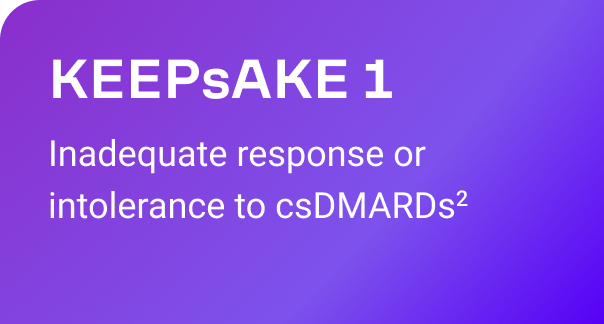
Overview of the KEEPsAKE trials
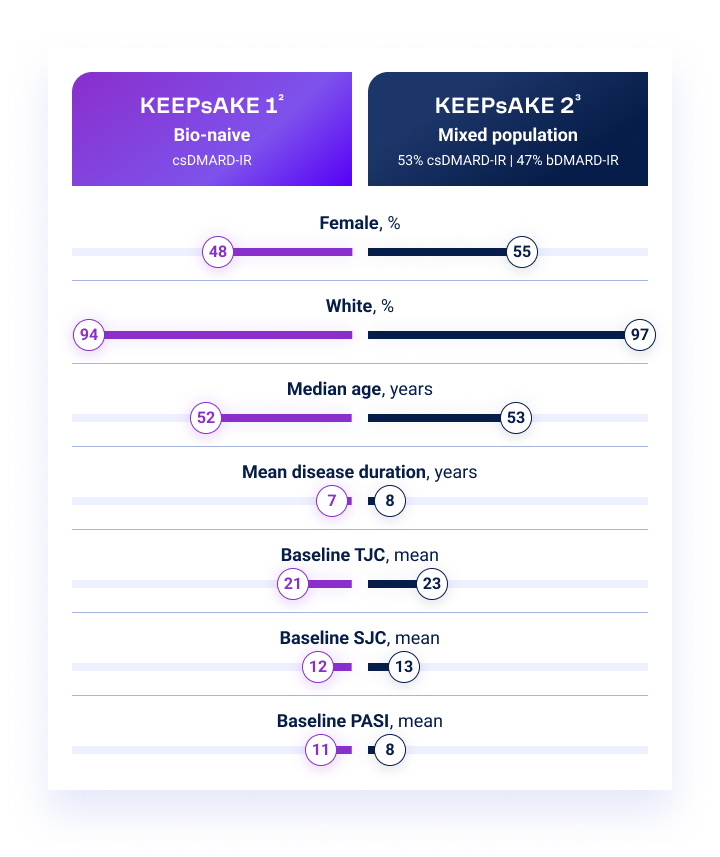
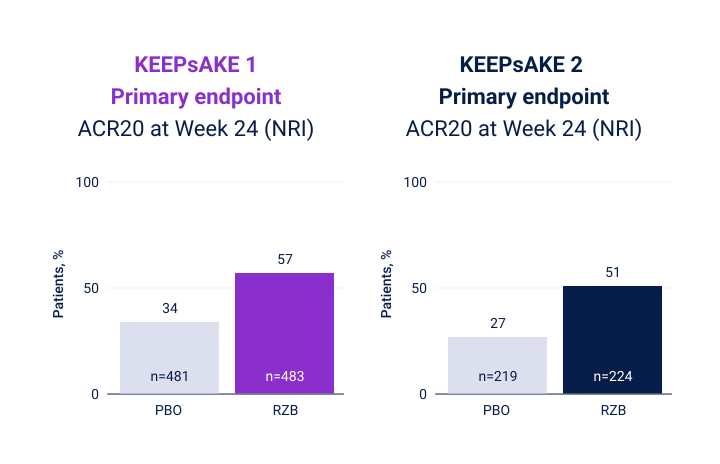
KEEPsAKE 1 and 2 are Phase 3, multicenter, randomized, double-blind, placebo-controlled studies designed to evaluate the safety and efficacy of risankizumab in adult patients with active PsA2,3
Inclusion criteria2,3
- Adults with active PsA defined as ≥5 tender joints and ≥5 swollen joints
- Active plaque psoriasis with ≥1 psoriatic plaque of ≥2-cm diameter or nail psoriasis
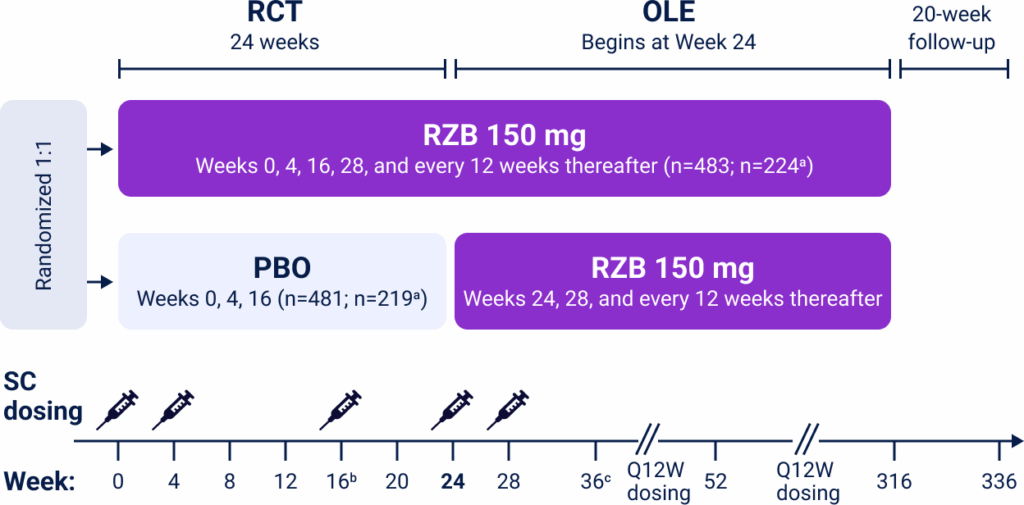
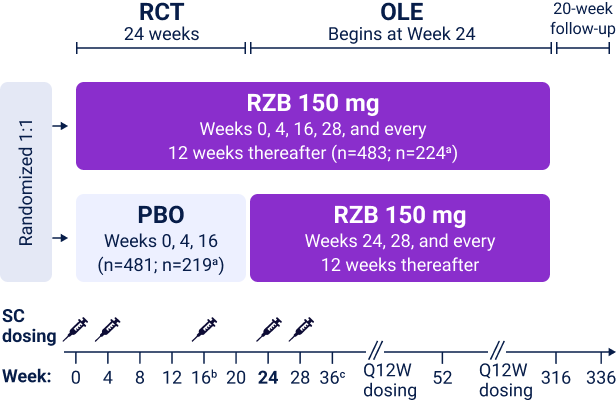
Study design2,3
Participants were allowed to be on background csDMARD therapy.
aThe first n value is for KEEPsAKE 1; the second n value is for KEEPsAKE 2; bAt Week 16, participants classified as nonresponders (defined as not achieving at least a 20% improvement in either or both TJC and SJC at both Week 12 and Week 16 compared with baseline) had the option to add or modify rescue concomitant medications/therapy; cStarting at Week 36, participants classified as nonresponders were discontinued from the study drug.
Radiographic endpoints
- Change from baseline in mTSS was a ranked secondary endpoint in KEEPsAKE 1 and did not meet statistical significance at Week 24
- The proportion of patients with no radiographic progression (mTSS ≤0.0) at Week 24 was a prespecified, nonranked endpoint in KEEPsAKE 1; thus, no statistical or clinical conclusions can be made
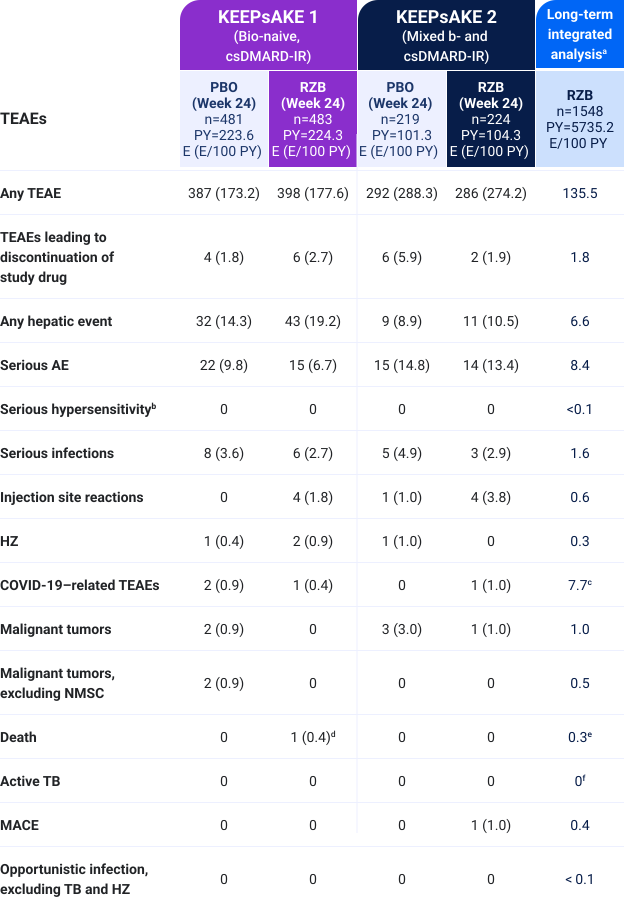
Safety in the KEEPsAKE trials
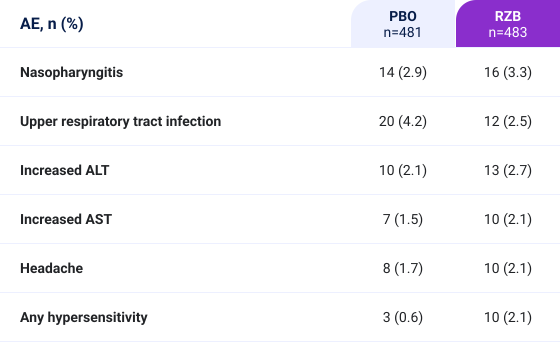
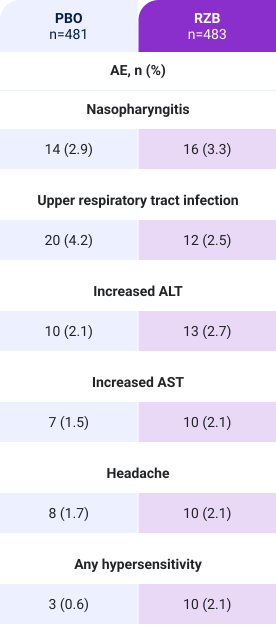
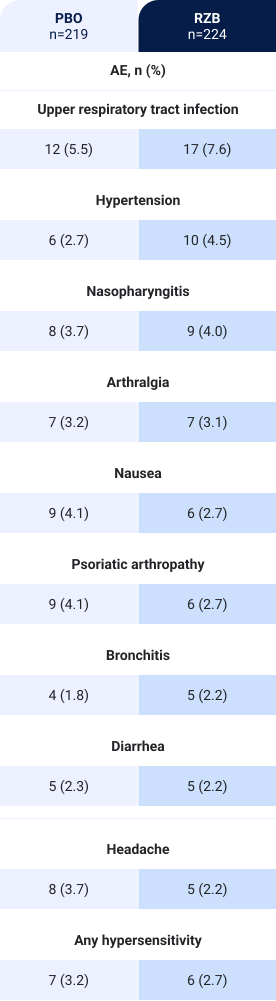
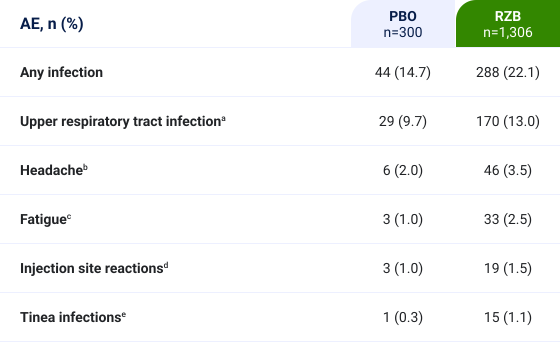
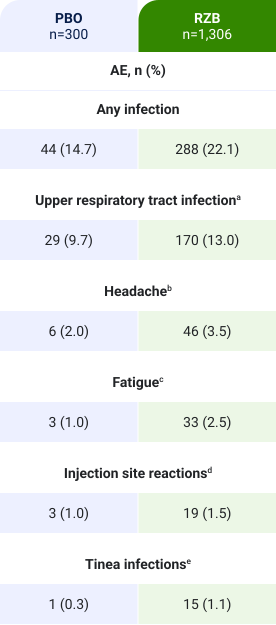
Most common AEs through controlled periods in risankizumab trials
Adverse drug reactions occurring in ≥2% of patients in KEEPsAKE 1 (bio-naive, csDMARD-IR) through Week 24
Adverse drug reactions occurring in ≥1% of patients treated with risankizumab in pooled PsO trials through Week 16
aIncludes: respiratory tract infection (viral, bacterial, or unspecified), sinusitis (including acute), rhinitis, nasopharyngitis, pharyngitis (including viral), tonsillitis; bIncludes: headache, tension headache, sinus headache, cervicogenic headache; cIncludes: fatigue, asthenia; dIncludes: injection site bruising, erythema, extravasation, hematoma, hemorrhage, infection, inflammation, irritation, pain, pruritus, reaction, swelling, warmth; eIncludes: tinea pedis, tinea cruris, body tinea, tinea versicolor, tinea manuum, tinea infection, onychomycosis.
The overall safety profile observed in participants with PsA treated with risankizumab is generally consistent with the safety profile in participants with plaque PsO with the addition of hepatic events and hypersensitivity reactions.
Abbreviations:
ACR20: improvement of ≥20% in American College of Rheumatology core criteria; AE: adverse event; ALT: alanine aminotransferase; AST: aspartate aminotransferase; b: biologic; COVID-19: coronavirus disease of 2019; cs: conventional synthetic; DMARD: disease-modifying antirheumatic drug; E: event; HZ: herpes zoster; IL: interleukin; IR: inadequate responder; MACE: major adverse cardiovascular event; MedDRA: Medical Dictionary for Regulatory Activities; mTSS: modified Total Sharp Score; NMSC: nonmelanoma skin cancer; NRI: nonresponder imputation; OLE: open-label extension; PASI: Psoriasis Area Severity Index; PBO: placebo; PsA: psoriatic arthritis; PsO: psoriasis; PY: patient-year; RCT: randomized controlled trial; RZB: risankizumab; SC: subcutaneous; SJC: swollen joint count; TB: tuberculosis; TEAE: treatment-emergent adverse event; TJC: tender joint count.
INDICATIONs
Risankizumab is indicated for the treatment of moderate to severe plaque psoriasis in adults who are candidates for systemic therapy or phototherapy.
Risankizumab is indicated for the treatment of active psoriatic arthritis in adults.
Important safety considerations
Risankizumab is contraindicated in patients with a history of serious hypersensitivity reaction to risankizumab or any of the excipients. Serious hypersensitivity reactions, including anaphylaxis, may occur. If a serious hypersensitivity reaction occurs, discontinue risankizumab and initiate appropriate therapy immediately. Risankizumab may increase the risk of infections. Instruct patients to seek medical advice if signs or symptoms of clinically important infection occur. If such an infection develops, discontinue risankizumab until the infection resolves. Evaluate patients for tuberculosis infection prior to initiating treatment with risankizumab. Avoid use of live vaccines in patients treated with risankizumab. The most common adverse reactions (≥1%) are upper respiratory infections, headache, fatigue, injection site reactions, and tinea infections.
Review accompanying risankizumab-rzaa full Prescribing Information for additional information, visit www.rxabbvie.com or contact AbbVie Medical Information at 1-800-633-9110.
How important is the safety profile when considering first-line therapies in your patients with PsA?
How frequently do you consider long-term outcomes when starting initial treatment with your patients with PsA?

How helpful was this discussion when considering initiating a biologic in your patients with PsA?
Explore more posts about risankizumab in PsA
- Keiserman M et al. ACR Convergence 2025. Poster 2362.
- Kristensen LE et al. Ann Rheum Dis. 2022;81(2):225-231.
- Östör A et al. Ann Rheum Dis. 2022;81(3):351-358.
- Kristensen LE et al. ACR Convergence 2022. Abstract 2145.
- Data on file, AbbVie Inc. ABVRRTI73417.
- Kristensen LE et al. Poster presented at: Fall Clinical Dermatology Conference; October 21-24, 2021; Las Vegas, NV.
- Östör A et al. ACR Convergence 2023. Poster 1434.
- Östör A et al. Poster presented at: Fall Clinical Dermatology Conference; October 21-24, 2021; Las Vegas, NV.
- Gordon KB et al. EADV 2025. Oral presentation FC02.1C.
- Data on file, AbbVie Inc. ABVRRTI81418.
- SKYRIZI [package insert]. North Chicago, IL: AbbVie Inc.
- Strober B et al. AAD 2019. Abstract P9876.
- Data on file, AbbVie Inc. ABVRRTI68139.
© 2026 AbbVie Inc. All rights reserved. RISN-US-00079-MC v1.0 Approved February 2026