The story continues:
Two-year outcomes of a Phase 3 trial of upadacitinib in GCA
- 19-minute listen
Podcast
- Dr. Alvin Wells and Dr. Shikha Singla • January 2026
The experts

Anisha B. Dua, MD, MPH
Professor of Medicine
Director of the Northwestern Vasculitis Center
Division of Rheumatology
Northwestern University Feinberg School of Medicine

Ben Boone, MD
Rheumatologist
Rheumatology Associates, PLLC
Louisville, KY
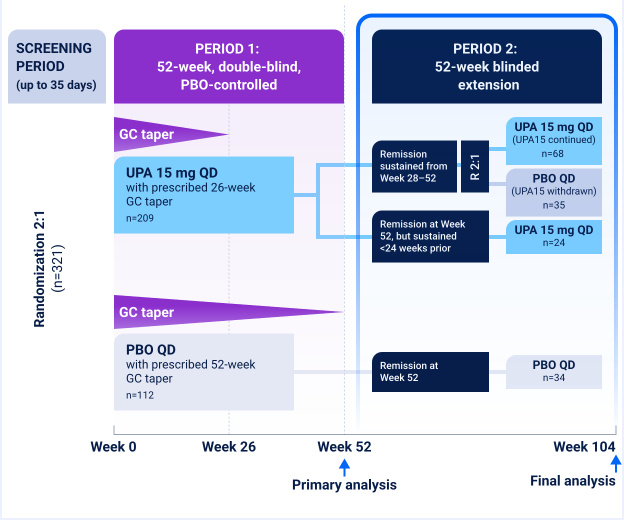
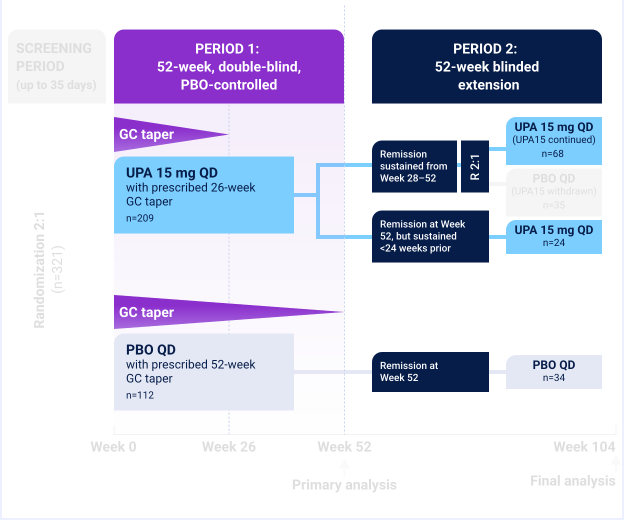
Study design
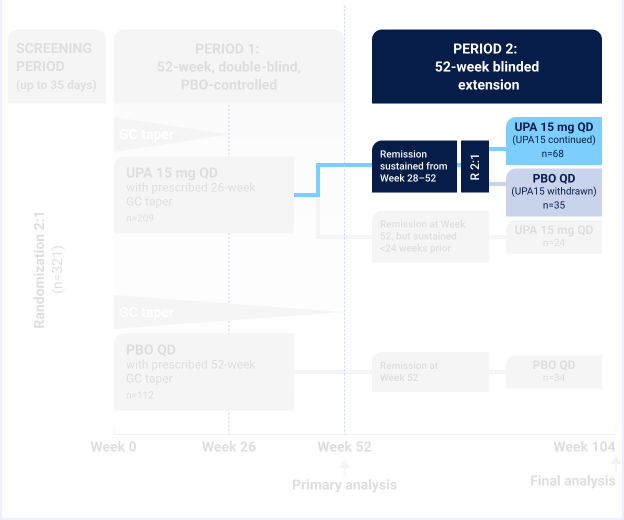
Period 2 Objective:
Period 1 primary endpoint
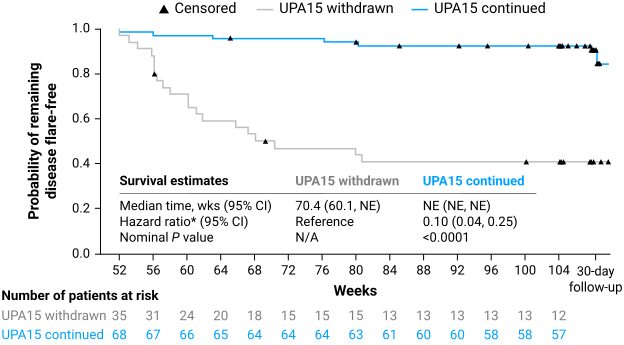
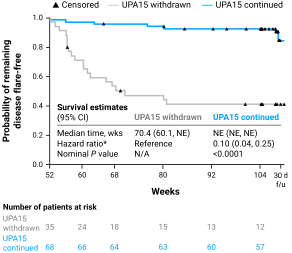
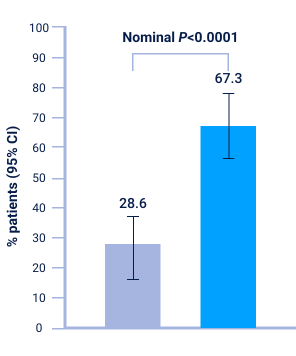
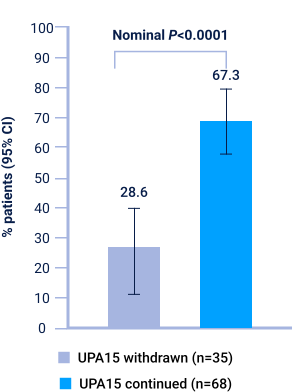
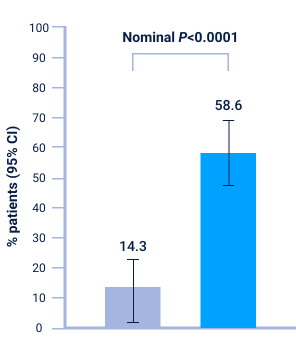
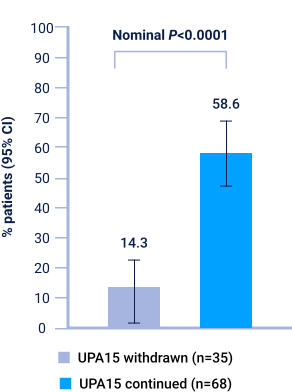
In Period 2, patients continuing on UPA15 were less likely to flare and more likely to remain in remission or complete remission through Week 104 compared with those withdrawn from UPA15.1,2
Disease flare is defined as an event determined by the investigator to represent recurrence of GCA signs or symptoms or an ESR measurement >30 mm/h (attributable to GCA) and requiring reinitiation of GCs.
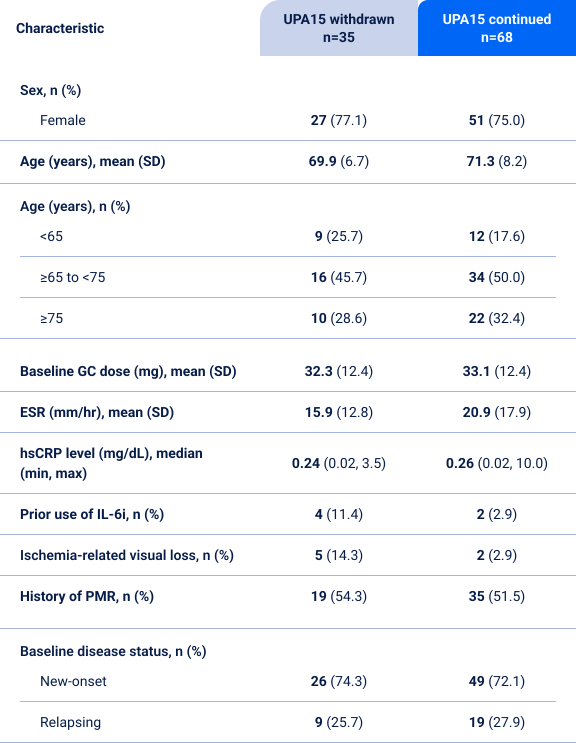
Differences in treatment arms could be due to treatment effects or differences in patient characteristics within the randomized treatment groups; therefore, limiting the integrity of randomization for this comparison.
from Week 52–104
Remission is defined as having achieved both of the following from Week 52 through 104:
- Absence of GCA signs and symptoms
- GC-free
from Week 52–104
Remission is defined as having achieved both of the following from Week 52 through 104:
- Absence of GCA signs and symptoms
- GC-free
Complete remission is defined as having achieved all of the following from Week 52 through 104:
- Absence of GCA signs and symptoms
- GC-free
- Normalization of ESR (to ≤30 mm/h) OR if ESR >30 mm/h and not attributable to GCA
- Normalization of hsCRP to <1 mg/dL
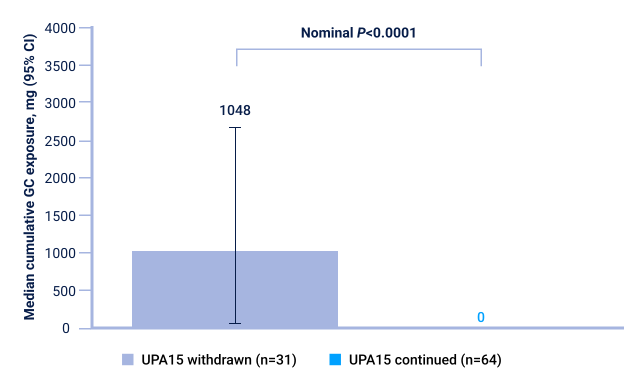
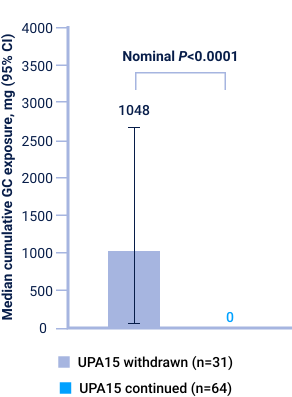
In Period 2, patients continuing on UPA15 had lower cumulative GC exposure from Week 52–104 compared with those withdrawn from UPA15.1,2
Mean cumulative GC exposure in Period 2 was 1533 mg (SD: 1587) vs 139 mg (SD: 449) for UPA15 withdrawn vs UPA15 continued, respectively.
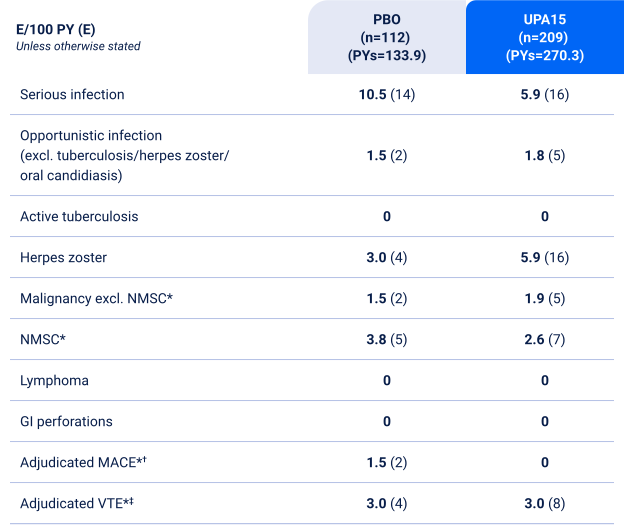
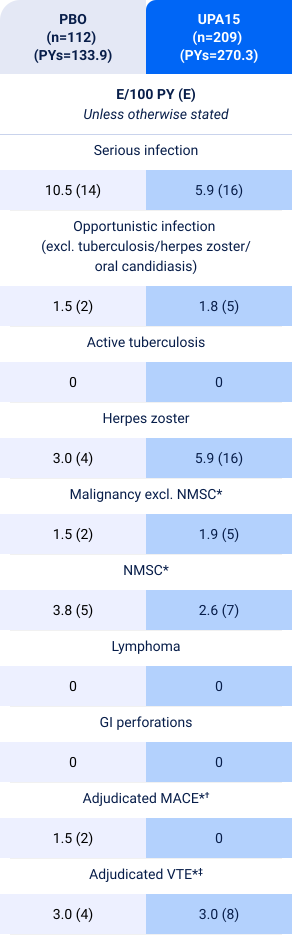
Safety data through Week 104
The safety profile observed in patients with GCA was generally consistent with the known safety profile for upadacitinib. Refer to the upadacitinib Important Safety Considerations regarding risk of serious infections, mortality, malignancies, MACE, and thromboses.
*n/100 PY (n).
†Defined as cardiovascular death, nonfatal myocardial infarction, and nonfatal stroke.
‡Includes pulmonary embolism and deep vein thrombosis.
Key takeaways
Compared to withdrawing UPA15, continuing on UPA15 through Period 2 after achieving sustained remission in Period 1 was associated with:1
- Lower likelihood of flares
- Higher likelihood of remaining in remission
- Lower cumulative GC use
Explore Period 1 (Week 0–52) data on RheumNow.com

A Phase 3 Trial of a JAKi in Patients With GCA
Listen as rheumatologist Dr. Andrea Rubbert-Roth discusses results and insights from Period 1 of the SELECT-GCA trial.
A Phase 3 Trial of a JAKi in Patients With GCA
Listen as rheumatologist Dr. Andrea Rubbert-Roth discusses results and insights from Period 1 of the SELECT-GCA trial.
CI: confidence interval; CRP: C-reactive protein; E: event; ESR: erythrocyte sedimentation rate; GC: glucocorticoid; GCA: giant cell arteritis; GI: gastrointestinal; hsCRP: high sensitivity C-reactive protein; IL-6: interleukin-6; IL-6i: interleukin-6 inhibitor; JAKi: Janus kinase inhibitor; MACE: major adverse cardiovascular event; N/A: not applicable; NE: not evaluable; NMSC: nonmelanoma skin cancer; PBO: placebo; PMR: polymyalgia rheumatica; PY: patient-years; QD: once a day; R: randomized; SD: standard deviation; TEAE: treatment-emergent adverse event; UPA: upadacitinib; UPA15: upadacitinib 15 mg daily; VTE: venous thromboembolism.
Abbreviations:
CI: confidence interval; CRP: C-reactive protein; E: event; ESR: erythrocyte sedimentation rate; f/u: follow-up; GC: glucocorticoid; GCA: giant cell arteritis; GI: gastrointestinal; hsCRP: high sensitivity C-reactive protein; IL-6: interleukin-6; IL-6i: interleukin-6 inhibitor; JAKi: Janus kinase inhibitor; MACE: major adverse cardiovascular event; N/A: not applicable; NE: not evaluable; NMSC: nonmelanoma skin cancer; PBO: placebo; PMR: polymyalgia rheumatica; PY: patient-years; QD: once a day; R: randomized; SD: standard deviation; TEAE: treatment-emergent adverse event; UPA: upadacitinib; UPA15: upadacitinib 15 mg daily; VTE: venous thromboembolism; W/D: withdrawn.
INDICATION
Upadacitinib is a Janus kinase (JAK) inhibitor indicated for the treatment of:
Adults with giant cell arteritis (GCA).
Limitations of Use: Upadacitinib is not recommended for use in combination with other JAK inhibitors, biologic disease-modifying antirheumatic drugs (bDMARDs), or with potent immunosuppressants such as azathioprine and cyclosporine.
Important safety considerations and boxed warning
Serious Infections: Patients treated with upadacitinib are at increased risk for developing serious infections that may lead to hospitalization or death. These infections include tuberculosis (TB), invasive fungal, bacterial, viral, and other infections due to opportunistic pathogens. Most patients who developed these infections were taking concomitant immunosuppressants, such as methotrexate or corticosteroids. Test for latent TB before and during therapy; treat latent TB prior to use. Consider the risks and benefits prior to initiating therapy in patients with chronic or recurrent infection. If a serious infection develops, interrupt upadacitinib until the infection is controlled.
Mortality: In a postmarketing safety study in RA patients ≥ 50 years of age with at least one cardiovascular (CV) risk factor comparing another JAK inhibitor to TNF blockers, a higher rate of all-cause mortality, including sudden CV death, was observed with the JAK inhibitor.
Malignancies: Malignancies have been observed in upadacitinib treated patients. In RA patients treated with another JAK inhibitor, a higher rate of lymphomas and lung cancers was observed when compared with TNF blockers. Patients who are current or past smokers are at additional increased risk. Consider the benefits and risks for the individual patient prior to initiating or continuing therapy with upadacitinib, particularly in patients with a known malignancy (other than a successfully treated non-melanoma skin cancer [NMSC]), patients who develop a malignancy when on treatment, and patients who are current or past smokers. NMSCs have been reported in patients treated with upadacitinib. Periodic skin examination is recommended for patients who are at increased risk for skin cancer. Advise patients to limit sunlight exposure by wearing protective clothing and using sunscreen.
Major Adverse Cardiovascular Events (MACE): In RA patients who were ≥ 50 years of age with at least one CV risk factor treated with another JAK inhibitor, a higher rate of MACE (CV death, myocardial infarction, and stroke) was observed compared with TNF blockers. Patients who are current or past smokers are at additional increased risk. Consider the benefits and risks for the individual patient prior to initiating or continuing therapy with upadacitinib. Patients should be informed about the symptoms of serious CV events and the steps to take if they occur. Discontinue upadacitinib in patients that have experienced a myocardial infarction or stroke.
Thrombosis: Thromboses, including deep vein thrombosis, pulmonary embolism, and arterial thrombosis, have occurred in patients treated with JAK inhibitors, including upadacitinib. Many of these adverse events were serious and some resulted in death. In RA patients who were ≥ 50 years of age with at least one CV risk factor treated with another JAK inhibitor, a higher rate of thrombosis was observed when compared with TNF blockers. Avoid upadacitinib in patients at risk. Patients with symptoms of thrombosis should discontinue upadacitinib and be promptly evaluated.
Hypersensitivity Reactions: Upadacitinib is contraindicated in patients with known hypersensitivity to upadacitinib or any of its excipients. Serious hypersensitivity reactions such as anaphylaxis and angioedema were reported in patients receiving upadacitinib in clinical trials. If a clinically significant hypersensitivity reaction occurs, discontinue upadacitinib and institute appropriate therapy.
Other Serious Adverse Reactions: Patients treated with upadacitinib also may be at risk for other serious adverse reactions, including gastrointestinal perforations, neutropenia, lymphopenia, anemia, lipid elevations, liver enzyme elevations, and embryo-fetal toxicity. If upadacitinib exposure occurs during pregnancy, please report the pregnancy to the surveillance program by calling 1-800-633-9110.
Vaccinations: Avoid use of live vaccines during, or immediately prior to, upadacitinib therapy. Prior to initiating upadacitinib, it is recommended that patients be brought up to date with all immunizations, including prophylactic varicella zoster or herpes zoster vaccinations, in agreement with current immunization guidelines.
Medication Residue in Stool: Reports of medication residue in stool or ostomy output have occurred in patients taking upadacitinib extended-release tablet. Most reports described patients with shortened gastrointestinal transit times. Instruct patients to contact their healthcare provider if medication residue is observed repeatedly.
Common Adverse Reactions in GCA: The most common adverse reactions (≥5%) are upper respiratory tract infections, headache, fatigue, peripheral edema, cough, anemia, rash, herpes zoster, and nausea.
Review accompanying upadacitinib full Prescribing Information for additional information, visit www.rxabbvie.com or contact AbbVie Medical Information at 1-800-633-9110.

- Schmidt W, et al. Presented at: American College of Rheumatology Convergence 2025; October 24-29, 2025; Chicago, IL. Oral Presentation 0776.
- Data on file, AbbVie Inc. ABVRRTI81873.
- Blockmans D, Penn SK, Setty AR, et al. N Engl J Med. 2025;392(20):2013-2024. doi:10.1056/NEJMoa2413449